Stories from the Lower Levels
-
Measuring heads to identify the bad guys-part 3
Read more: Measuring heads to identify the bad guys-part 3
As previously mentioned, even with photography it could be difficult for law enforcement to know after an arrest if they had an experienced criminal on their hands deserving twenty years in the slammer or a first-time offender who could reform and go on to lead an upstanding life.
In 1879, French criminologist Alphonse Bertillon, a former records clerk for the Paris police, developed a system that addressed this challenge by cataloguing human characteristics that couldn’t be changed by dropping twenty pounds, changing a beard to a goatee or going from a blond to a redhead.
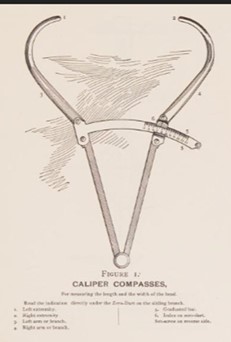
The Bertillon system was based on the idea that no two people could be exactly alike and that measuring their body parts would be the best way to catalog their unique characteristics and identify them later. Bertillon’s measurements included:
- Head length
- Head breadth
- Length of the middle finger
- Length of the left foot
- Length of the “cubit” (forearm from elbow to middle fingertip)
- Shape of the ears, eyebrows, mouth, and eyes
- Tattoos and scars
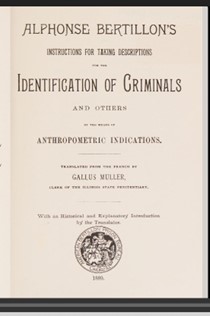
You can learn how to use Bertillon’s system from a guide published in 1889- posted HERE (you’ll have to “borrow” the book from archive.org but it is free).
-
Trying to identify the bad guys – part 2
Read more: Trying to identify the bad guys – part 2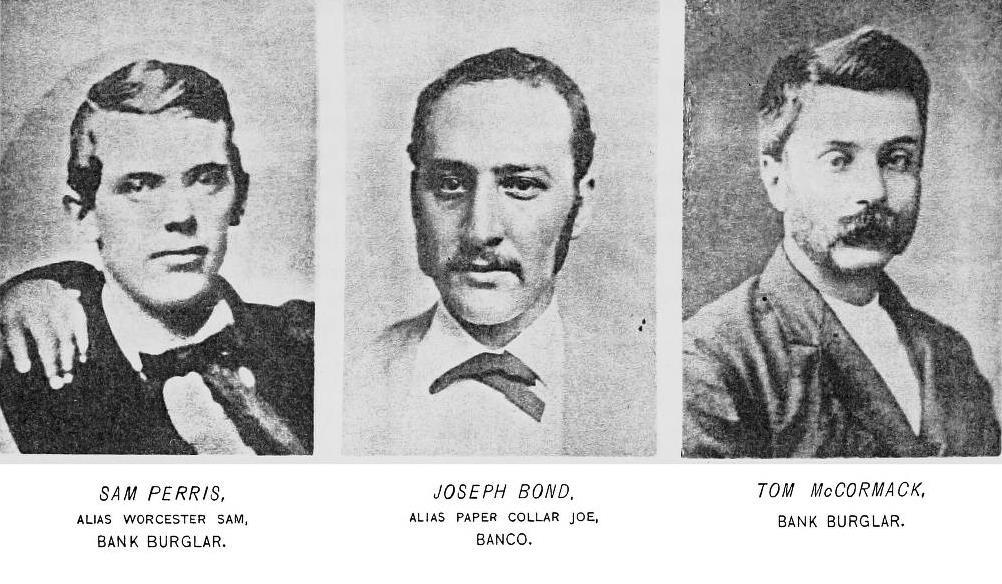
Per my previous post, trying to identify and catch bad guys was problematic before the turn of the twentieth century, though the advent of photography helped. Police Departments established Rogues Galleries but getting individual photos to departments across the country could be tough (and photo identification had other issues, as previously mentioned).
In 1886, police inspector Thomas Byrnes of the New York City Police Dept. published Professional Criminals of America, available HERE on Archives.org and a really fun read. He includes photos and descriptions of various criminals operating across the country at the time and adds fascinating details about how they operated.
Regarding bank robbers, he also warned….
“Robbery is now classed as a profession, and in the place of the awkward and hang-dog looking thief we have to-day the intelligent and thoughtful rogue…”
-
The beginning of the end of anonymous sprees
Read more: The beginning of the end of anonymous sprees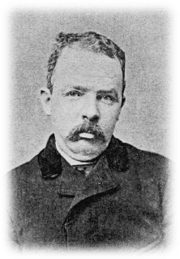
Terrance Murphy Before law enforcement developed standardized identification practices, criminals often changed their names like they changed their socks. Those who had no distinguishing marks or could easily alter their appearance (like pickpocket Terrence (Poodle) Murphy, who could quickly grow a full red beard) could go for years without getting caught simply by moving around the country while committing their crimes.
The advent of photography helped. Law enforcement agencies developed “Rogues Galleries” and officers memorizes the faces of notorious criminals before they went out on patrol. Officials also used the gallery to help identify men and women wanted elsewhere when they had them in custody for unrelated crimes.
Many criminals fought being photographed, as it could mark the beginning of the end of their anonymous career.
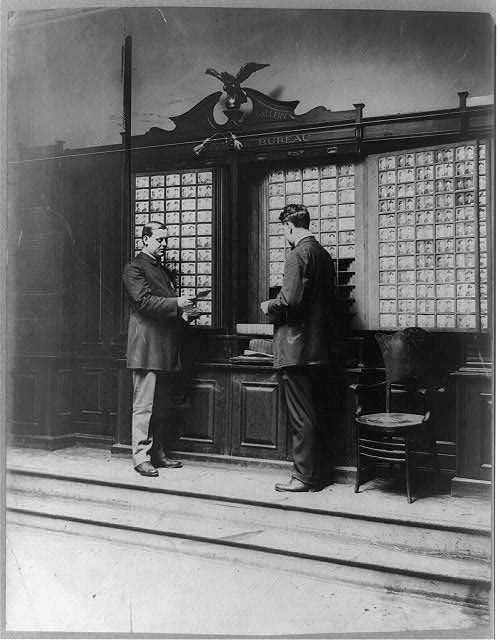
New York’s Rogues Gallery 1909 (Source: Library of Congress)

